

A few weeks ago, Barbara, 76, stood on one foot during a session and said with a laugh, “My legs are doing okay, but my brain feels like it’s working harder than my muscles. Is that normal?”
It’s not just normal — it’s exactly how balance works.
Balance isn’t only a leg thing. It’s a conversation your brain has with your eyes, inner ears, and feet every single second. Your brain is the conductor — constantly interpreting signals, making tiny adjustments, and learning from every step you take.
The beautiful part? Your brain is built for this. It has neuroplasticity — the ability to rewire and improve connections even in our 70s, 80s, and beyond. Every time you practice balance, you’re not just strengthening muscles. You’re training your brain to get faster and smarter at keeping you steady.
That’s why you’ve probably noticed something during our sessions: when we add a small challenge (turning your head, reaching for something, or closing your eyes for a few seconds), it feels mentally demanding at first… and then gradually gets easier. Your brain is literally building new pathways.
This cognitive-motor connection is powerful. When your brain and body work well together, you move with more confidence, recover from stumbles faster, and feel steadier in daily life.
This week, try this gentle brain-training balance moment (hold a counter or wall for safety the first few times):
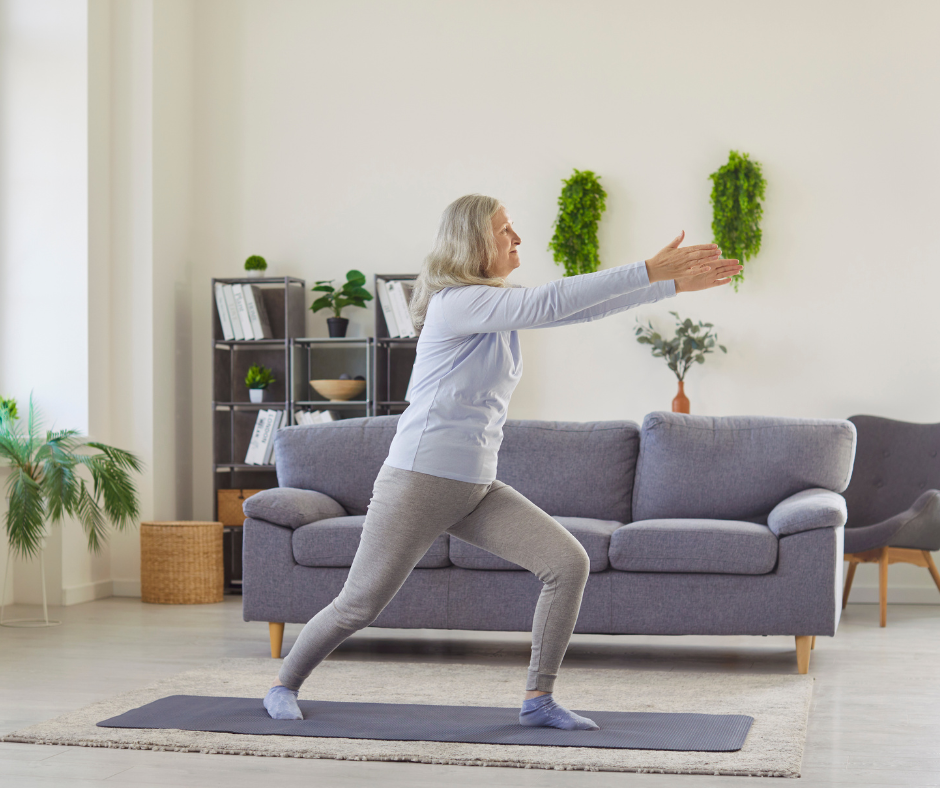
Stand comfortably with feet hip-width apart. Slowly turn your head left and right 8–10 times (as if checking for traffic). Then add a small reach forward with one arm while still turning your head. Do this for 20–30 seconds.
Notice how your brain and legs have to coordinate. That slight mental effort is your neuroplasticity at work — your brain getting better at balancing you in real-life situations.
You’re not just training your legs. You’re training your whole system — brain included.