

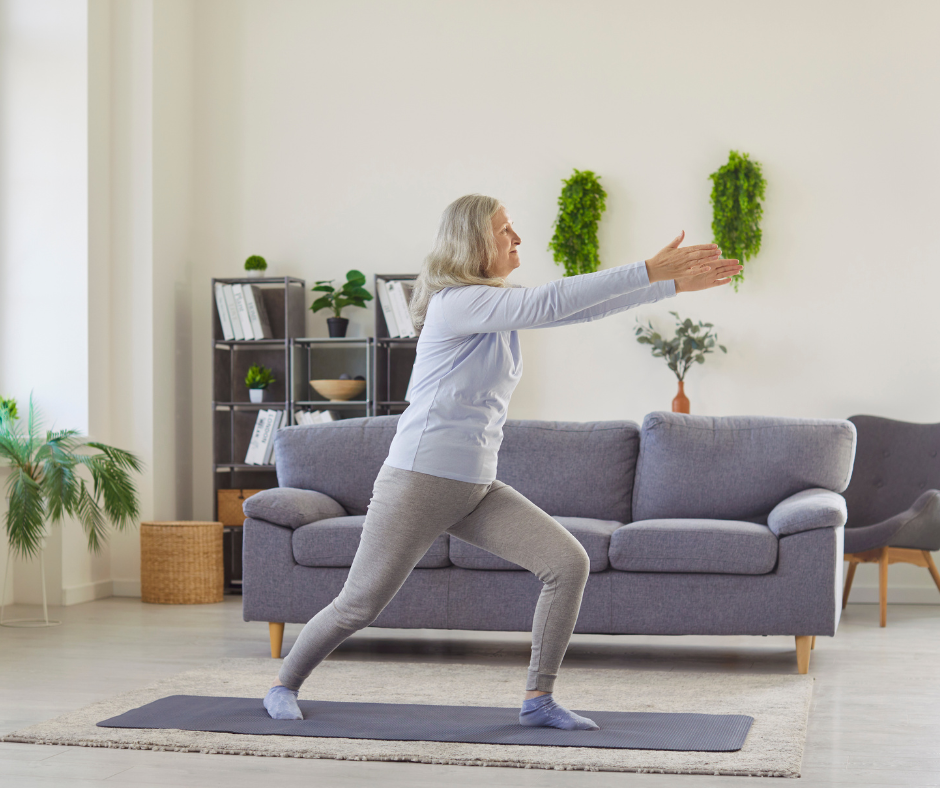
You’re already choosing movement that fits your life — that choice alone is powerful.
A few months ago, Susan, 72, came to us after trying both group water aerobics and 1-on-1 sessions. She said, “The class is fun — I love the music, the people, the energy. But I’m always modifying everything because my knees can’t do the jumps, and I worry I’m holding the group back. The private sessions feel slower, but I never feel rushed or embarrassed.”
Susan wasn’t wrong about either format. Both have real gifts — and both have natural limits.
Group classes offer something special:
- Social motivation — seeing others show up, laughing together, feeling part of something bigger. For many people, that community is the main reason they keep coming back week after week.
- Energy and variety — music, different instructors, changing routines keep things fresh and fun.
But groups also have built-in trade-offs:
- Risk stratification is harder — the instructor can’t watch 12–15 people every second. If someone has recent falls, dizziness, joint instability, or is still learning safe form, a small wobble or wrong movement can go unnoticed.
- Personalization is limited — the pace, intensity, and variations are set for the “average” person in the room. Those who need slower transitions, lighter resistance, or different cues often end up adapting to the group instead of the group adapting to them.
1-on-1 training offers the opposite strengths:
- Risk stratification and safety — eyes on every rep, every transition, every balance moment. Form can be corrected in real time, progressions adjusted instantly, and red flags spotted before they become problems.
- Personalization — every exercise, weight, range, speed, and breathing cue can be tailored to exactly where the body is that day, respecting old injuries, medications, joint limitations, or energy levels.
But 1-on-1 also has trade-offs:
- Less social energy — no group laughter or peer encouragement (though the 1-on-1 relationship can become its own kind of supportive bond).
- Less built-in variety — routines are focused rather than constantly changing like a class.
The truth is neither is universally “better.” It depends on the person’s risk level, goals, and what keeps them consistent.
- High-risk or recent injury? 1-on-1 is usually the safest place to rebuild form, confidence, and strength before adding group energy.
- Stable, confident, looking for fun and community? Group classes can become the perfect long-term home.
- Somewhere in between? Many people do both — 1-on-1 to fine-tune safety and personalization, group for motivation and joy.
You’ve already found what works for you right now — and that’s the real win.
This week, try this simple reflection (no exercise required):
Think about the last few movement sessions you did — class, private, or home. Ask yourself one gentle question: “Did I feel safe, seen, and able to progress at my own pace?”
No right or wrong answer. Just notice what your body and mind are telling you about what “better” means for you today.