

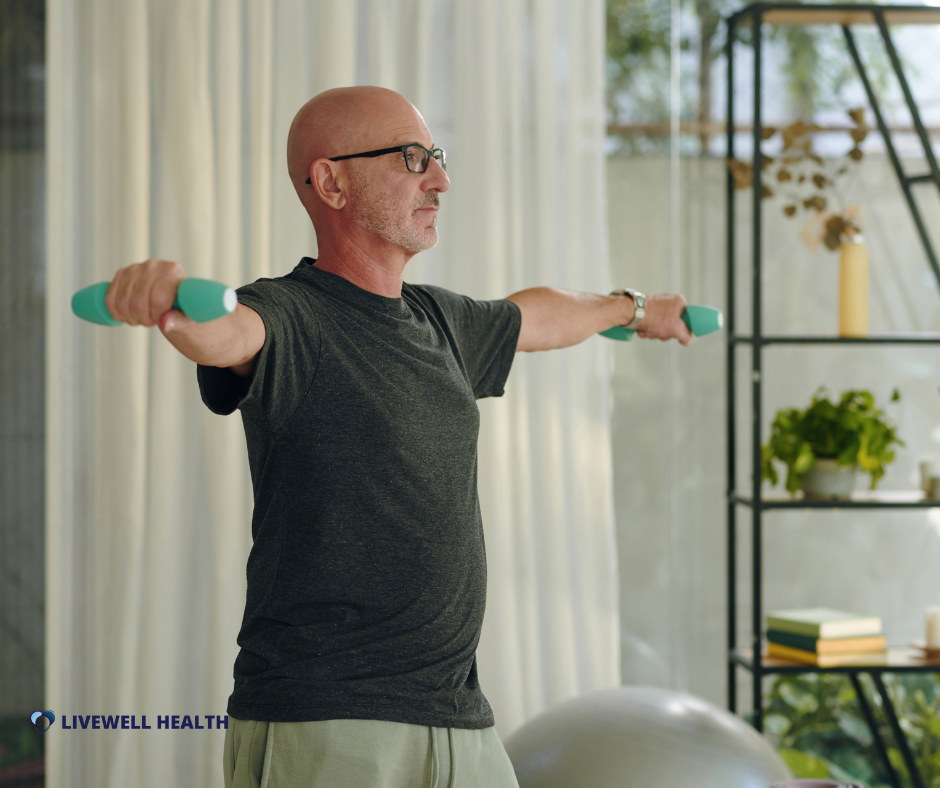
Last summer, one of our members, George, 76, started with us after a year of YouTube videos in his living room. He told me, “It’s perfect at home—no crowds, no schedule, no one judging if I need to stop. I thought it was the safest way to exercise.”
After a few guided sessions, he paused mid-exercise and said, “I just noticed my back was rounding a little on that last rep. I’ve been doing that move for months and never caught it. Having someone watch makes me feel safer, not less.”
Home training feels safer in many ways—and for good reason. You control the pace, the music, the temperature, the privacy. No germs in a gym, no slippery locker-room floors, no awkwardness if something feels hard.
And yet home alone has its own quiet limits that can affect long-term safety and progress:
- Form and progression — without eyes on you, small form drifts (rounded back, locked knees, uneven weight) can go unnoticed and build into aches or imbalances over time. Progression stays modest because there’s no one to say “You’re ready for a little more weight or a new challenge.”
- Immediate support — if dizziness, fatigue, or a sudden “whoa” moment hits, there’s no spotter, no hand to steady you, no quick adjustment to keep the set safe.
- Motivation and consistency — the comfort of home can sometimes lead to skipping harder days or sticking to the same routine, which limits how much strength, balance, and bone density you can build.
You’ve already given yourself the gift of consistency with us—someone who watches form, gently pushes progression, and is right there if you need a steady hand or a word of encouragement. That guidance doesn’t take away the comfort of home; it adds a safety layer that makes home training (and everything else) even more effective.
This week, try this simple one-minute awareness check during one of your home exercises (or any movement you do regularly):
Pick one familiar move—standing up from a chair, lifting a light weight, or balancing while reaching. Do it once as usual. Then do it a second time while imagining someone is gently watching (or even record a 10-second video of yourself if you’re curious). Notice if your posture feels a little taller, your movements a little more deliberate, or your effort a little more even.
That tiny shift in attention often reveals how much safer and stronger guided movement can feel—even when you’re in your own home.