

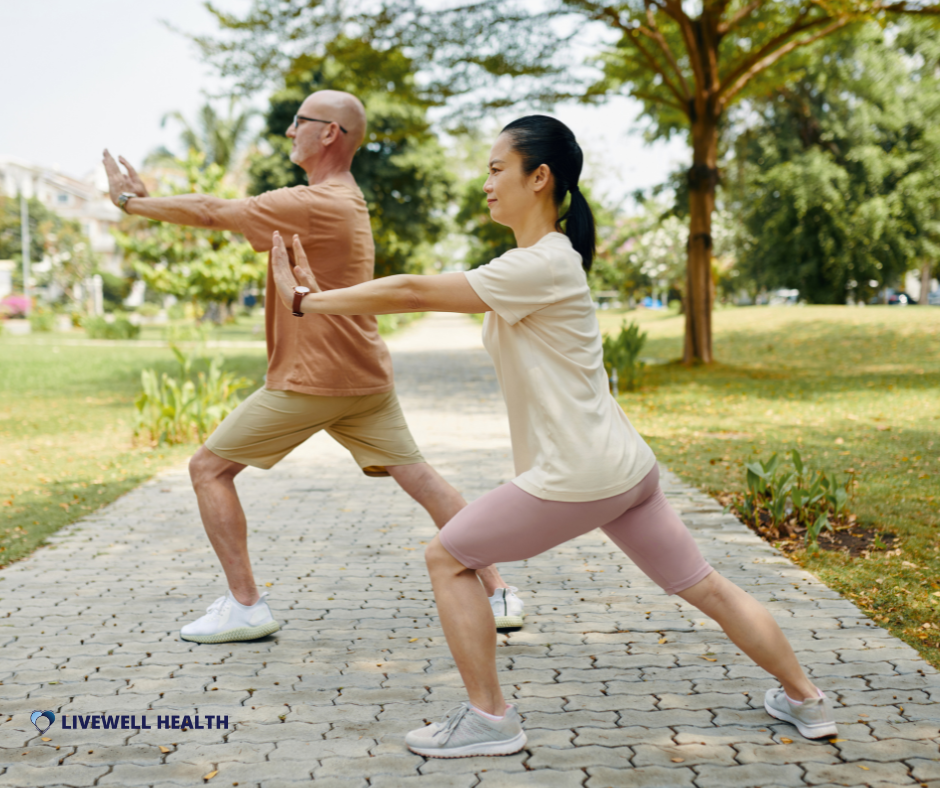
A few months ago, one of our members, Susan, 68, came to her first session carrying her Tai Chi class schedule like a badge of honor. She said, “I’ve been doing Tai Chi three times a week for years. It’s gentle, it helps my balance, and I feel calmer afterward. I thought that was enough.”
After a few sessions of adding simple strength work, she paused during a sit-to-stand and looked surprised. “I just stood up without pushing off the arms… and it felt solid. I didn’t realize how much effort that used to take. Tai Chi makes me feel graceful, but this makes me feel strong.”
Tai Chi is powerful in its own way. The slow, flowing movements improve balance, coordination, mindfulness, and stress reduction. Many studies show it reduces fall risk and helps people feel more centered and present in their bodies.
And yet it is incomplete when it comes to two things your bones and muscles need most as we age:
- Bone density — Tai Chi is low-impact and doesn’t provide the kind of progressive loading (pushing or pulling against resistance) that stimulates bone remodeling.
- Strength — The practice uses bodyweight and internal resistance, but it rarely challenges the fast-twitch muscle fibers or creates the mechanical stress needed to maintain or rebuild muscle mass (sarcopenia prevention).
You’ve been giving your body both gifts every session with us: the grace and calm that Tai Chi offers + the raw power and bone protection that only targeted strength can deliver.
You don’t have to choose. You can keep the flow and add the foundation.
This week, if you practice Tai Chi (or know someone who does), try this simple awareness check after your next class or session:
Notice one everyday movement you do later that day—standing up from a chair, carrying a bag, or climbing a step. See if it feels a little more solid, a little less effortful than it used to. That extra ease isn’t replacing your Tai Chi—it’s completing it.