

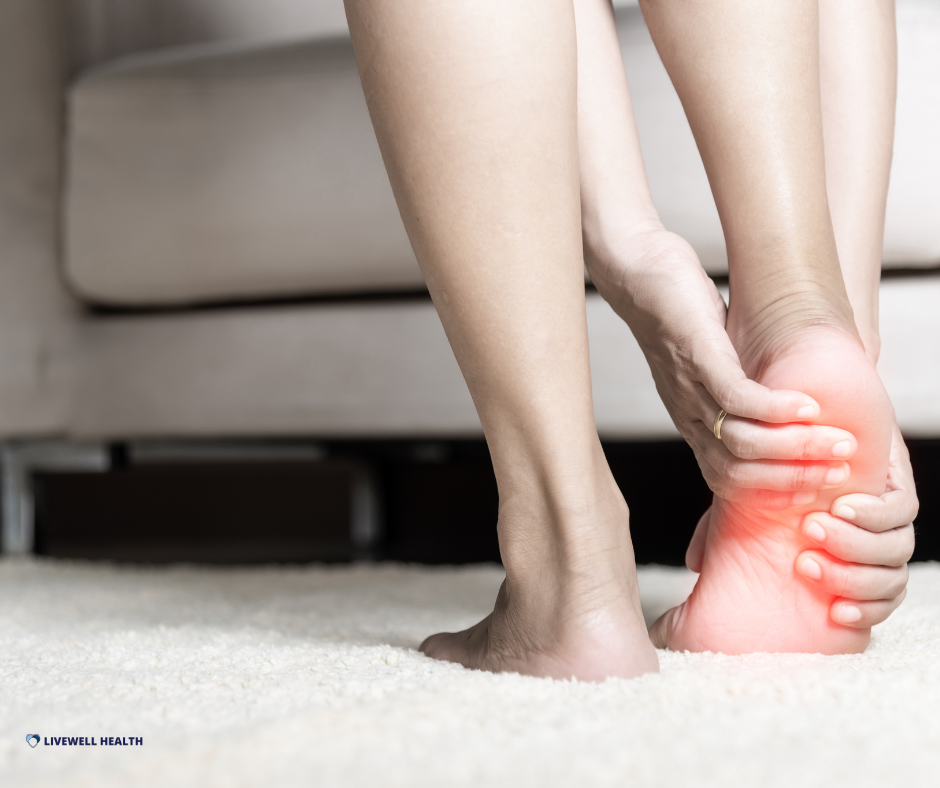
You’re already doing something incredibly smart that most people with neuropathy never discover.
But first, let me tell you about Richard, 73, who came to us last year.
He said, “My feet feel numb half the time. I can’t tell where the floor is anymore, and I’m terrified of falling. I’ve pretty much stopped walking outside.”
Richard has peripheral neuropathy—common with diabetes, chemotherapy, or just years of wear and tear. The nerves in his feet weren’t sending clear signals to his brain anymore.
Here’s what most people don’t realize:
When sensation fades, your fall risk goes up… but strong muscles and good balance habits can compensate beautifully.
Think of it like this: Your feet are the sensors. Your legs, hips, and core are the stabilizers.
When the sensors get fuzzy, strong stabilizers keep you upright anyway.
A study in the Journal of Geriatric Physical Therapy followed adults with neuropathy for two years:
- Those who did no strength or balance work fell almost twice as often.
- Those who built leg and core strength (even gently) cut their fall risk by up to 60 %—even with the same numb feet.
You’re already building those stabilizers every week with us. That’s why so many of you tell us you feel steadier on uneven ground, even if your feet still tingle or feel “off.”
This week, try this simple 1-minute “stability check” you can do anywhere:
- Stand next to a counter or wall (just for safety).
- Shift your weight slowly side to side, feeling how your hips and legs catch you.
- Then march slowly in place for 20–30 seconds, lifting knees a little higher than usual.
- Notice how your muscles—not just your feet—keep you steady.
That’s your built-in safety net working.
Numbness in the feet doesn’t have to mean fear of falling. It just means your strength matters even more—and you’re already ahead of the game.
If you know someone who’s pulling back from walks or activities because “my feet just don’t feel right anymore”… please share this right now.